
Why Guides Matter in Lapland?
When planning a trip to Lapland, it is easy to compare activities by the things you can see immediately.
The photos.
The price.
The duration.
The pick-up time.
The route.
The promise of northern lights, snow, animals, wilderness or adventure.
These things matter.
But they are not the whole experience.
Because often, what shapes the experience most is not only what you do.
It is who you do it with.
A good guide can change the whole feeling of a day.
A rushed or unsupported guide can change it too.
And when you are choosing activities in a place like Lapland - where weather, darkness, cold, distances, safety, silence and local knowledge all matter... the person guiding you is not a small detail.
They are part of the experience itself.
A guide is not just someone who takes you somewhere
Sometimes guiding is misunderstood as something simple.
Someone picks you up.
Drives you to a place.
Gives instructions.
Takes photos.
Brings you back.
But good guiding is much more than moving people from one location to another.
A good guide is reading the group before the activity even begins.
Are people dressed well enough?
Is someone nervous?
Is someone pretending they are not cold?
Is the weather changing?
Is the plan still right for this group, on this day?
Is there space to slow down?
Does someone need help but not know how to ask?
Good guiding is not only about information.
It is judgement.
Safety.
Timing.
Presence.
Care.
Adaptation.
It is knowing when to speak, when to stay quiet, when to continue and when to change the plan.
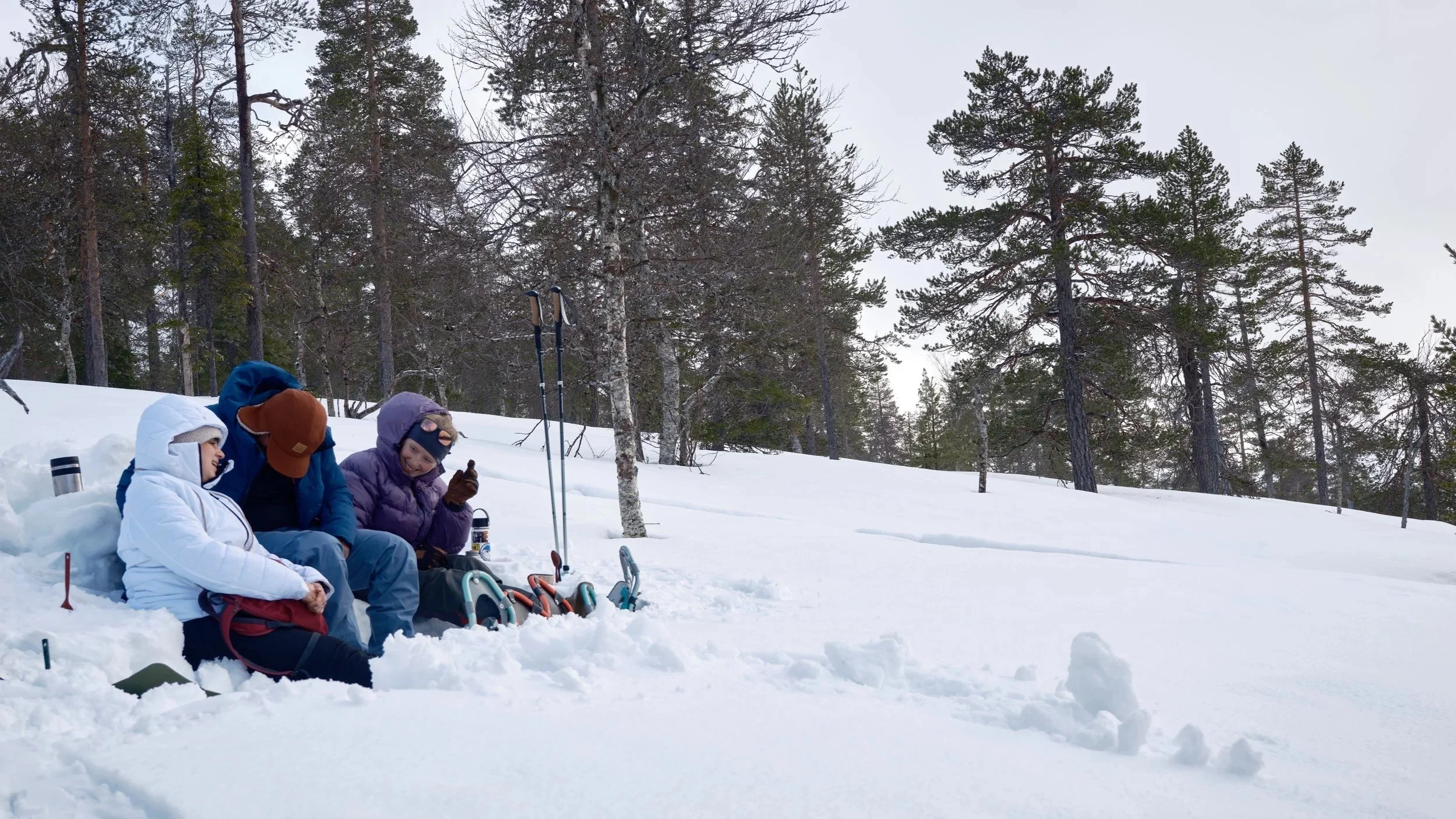
Picture from our winter hike to nearby fells. There is always time to sit down and for some home made soup! It can’t even be called a proper trip if it does not include food. 😉
The same activity can feel completely different
Two travellers can book what looks like the same activity on paper.
A snowshoe walk.
A northern lights evening.
A reindeer visit.
A forest lunch.
A winter hike.
But the experience can feel completely different depending on the guide.
With one guide, the day may feel rushed, unclear and disconnected.
With another, the same activity may become calm, safe, personal and meaningful.
The route might be simple.
The weather might not be perfect.
The northern lights might not appear.
And still, the evening can be memorable because the guide helped people understand where they were, what they were waiting for and how to be present in the conditions they had.
That is something we wish more travellers knew:
A good guide does not only “deliver” the promised activity.
A good guide helps you experience what is actually there.
In the North, conditions matter
Lapland is beautiful, but it is not controlled.
The weather changes.
Cold affects people differently.
Darkness can feel unfamiliar.
Distances can be longer than expected.
Snow conditions vary.
Auroras cannot be guaranteed.
People arrive with different experience levels, expectations and comfort zones.
This is why guiding matters.
A good guide knows that the plan on paper is only the beginning.
They are constantly adjusting.
Maybe the group needs more time to dress properly.
Maybe the wind makes one location less suitable.
Maybe someone is getting cold faster than expected.
Maybe the snow is deeper than planned.
Maybe the activity should be shortened, slowed down, or changed completely.
Good guiding is not about forcing the original plan to happen at any cost.
It is about making good decisions in real conditions.
These are conditions we are used to operate during our last 7 years in Svalbard. Luckily here in Lapland we don’t need to deal with such extreme conditions too often but it does not need to be as extreme for plans to change - safety comes always first.
Guides carry the atmosphere too
Safety is important, but guides also shape something more subtle: the atmosphere.
A guide can make people feel rushed - or settled.
Like tourists being processed - or guests being welcomed.
Like they are completing a product - or entering a place with respect.
This matters especially in Lapland, where so much of the experience is not loud.
Silence.
Darkness.
Waiting.
Weather.
Small tracks in the snow.
A fire being lit.
The first stars.
The feeling of cold air on your face.
A good guide does not need to fill every quiet moment.
Sometimes their job is to create enough safety and context that people can be quiet.
That is a skill.
Experience is not only about years
It is easy to say that guides should be experienced.
And yes, experience matters.
But experience is not only about how many years someone has worked.
It is also about how they are trained, supported and mentored.
Whether they are given enough time to prepare.
Whether they know the place they are guiding in.
Whether they are encouraged to make safe decisions.
Whether they are rested enough to be present.
Whether they have people around them to learn from.
A new guide can be excellent if they are well trained, honest, supported and aware of their limits.
A more experienced guide can still do poor work if they are exhausted, rushed or working in a system that values volume over care.
So when we talk about guides, we are not only talking about individuals.
We are also talking about the systems around them.
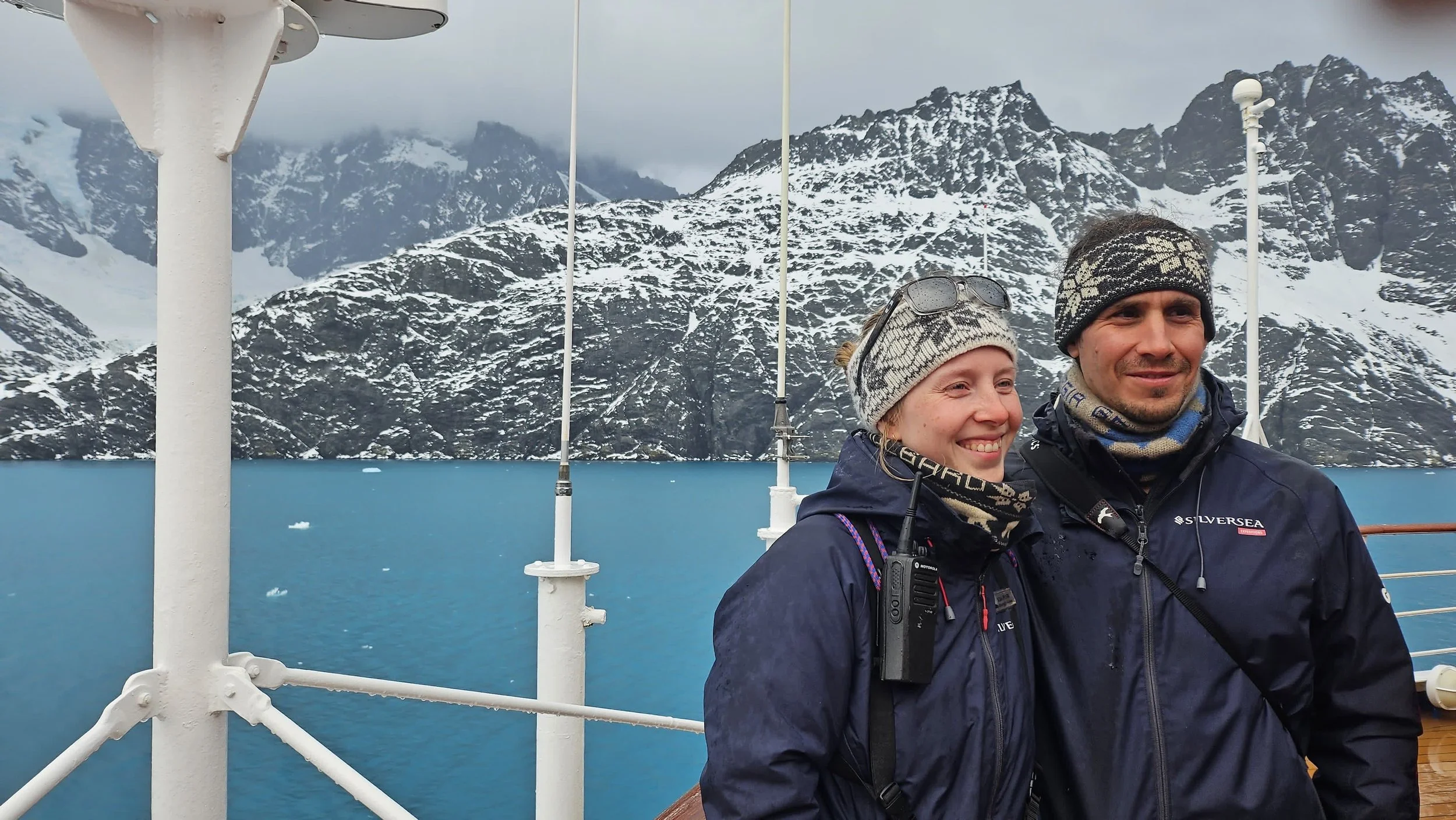
We will be forever grateful that we have gotten the chance to work with companies and teams where we have felt supported. We have learned that there is always something new to learn and to grow as a guide.
Guiding should be treated as a profession
One thing we hope to see more of in Lapland is guiding being treated as a serious profession.
A guide is not only someone who leads a group, drives a vehicle, or takes guests to a location. They are responsible for people’s safety, comfort, expectations, understanding and often their first real encounter with the Arctic environment.
That responsibility should be reflected in how guides are trained, supported, paid and developed.
Unfortunately, in seasonal tourism, guide work is not always valued this way. In places where many people are willing to come for one winter season, it can be easier and cheaper for companies to hire new seasonal guides each year than to invest in experienced guides who expect professional conditions and fair pay.
This is not a criticism of new guides.
Everyone starts somewhere and many seasonal guides work hard, care deeply and bring real warmth into their work.
But guiding quality depends on more than enthusiasm.
It depends on training, mentoring, local knowledge, good leadership, rest, fair working conditions and the possibility to grow in the profession.
Through our work in expedition cruising, Svalbard and Antarctica, we have also seen another side of guiding - where guides are often treated more clearly as professionals, with ongoing training, development, responsibility and higher expectations.
We would love to see more of that in Lapland too.
For us, raising the standard of guiding is part of responsible tourism.
A good company should care about its guides
If a company says it cares about quality, responsibility or safety, it should also care about the people delivering the experience.
Guides are often the ones carrying the promises made in marketing.
They are the ones meeting the guests.
Reading the weather.
Driving the roads.
Handling the equipment.
Explaining the place.
Managing expectations.
Solving problems.
Keeping people safe.
Creating the feeling guests remember.
If guides are undertrained, unsupported, overworked or constantly changing, it becomes harder to offer consistent quality.
This is one reason we think it is worth noticing whether a company shows who their guides are.
You do not need every guide’s full life story.
But if you cannot find anything about the people guiding the experience, it is worth paying attention.
Sometimes it simply means the company has not prioritised sharing that information.
But often, invisible guide teams can also point to high seasonal turnover - with new guides coming in each year rather than a stable core team returning season after season.
That does not automatically mean the experience is bad.
But it does make it harder for travellers to understand who is carrying the knowledge, safety and care behind the experience.
What to look for before booking
Before booking a guided activity in Lapland, you can look for small signs.
Does the company introduce its guides or hosts?
Do they explain their background, training or connection to the place?
Do they speak realistically about weather, northern lights and conditions?
Do they describe the experience in a way that feels specific, not copy-pasted?
Do they seem to value safety and pace, not only photos and excitement?
Do they give the activity enough time?
Do they seem willing to say when something depends on conditions?
You can also ask directly:
Who will guide the experience?
How large is the group?
What happens if the weather changes?
What experience or training do the guides have?
How much time is included for questions, breaks or warming up?
These are not difficult or rude questions.
They are part of choosing with care.
The guide can be the difference between seeing and understanding
A traveller can look at a snowy forest and see a beautiful background.
A good guide can help them notice more.
Tracks.
Weather.
Light.
Silence.
Local habits.
Seasonal changes.
Why people move a certain way.
Why the cold feels different in wind.
Why an animal behaves as it does.
Why waiting is sometimes part of the experience.
This is one of the reasons guiding matters so much.
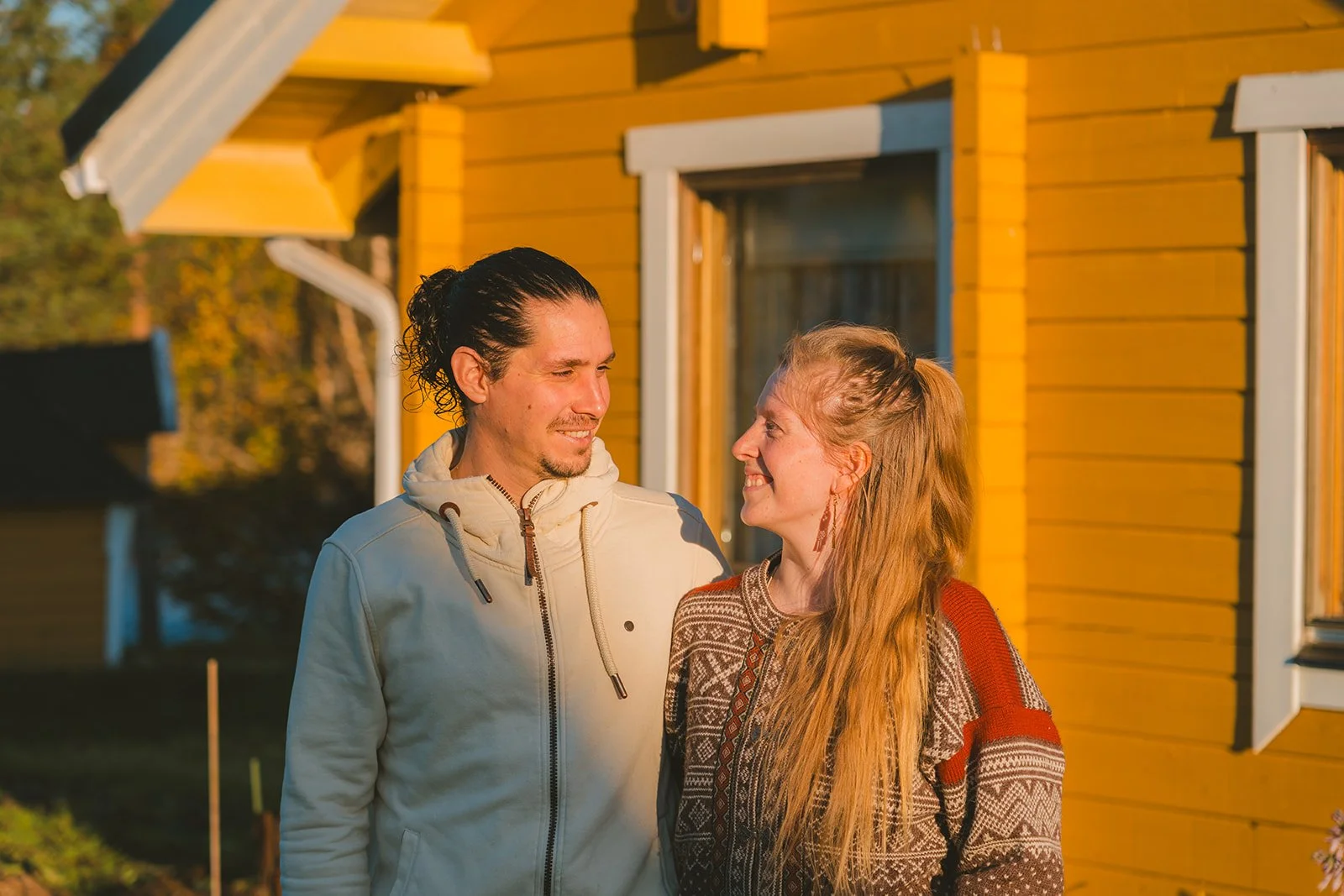
The guide is not there to perform Lapland for you.
At their best, they help you meet it more honestly.
Why this matters to us
At Polar Tranquil, our background is in guiding and hosting in remote northern and southern places - Finnish Lapland, Svalbard, Antarctica and beyond.
Those environments taught us that good guiding is not about doing more.
It is about being attentive.
To the place.
To the weather.
To the group.
To safety.
To timing.
To the quiet things that might otherwise be missed.
This is also why we are careful about the activities we recommend to our guests.
We are not only asking:
Is this activity popular?
We are asking:
Who is behind it?
Who is guiding it?
Will guests be cared for properly?
Does the experience have enough time?
Does it help people understand Lapland better?
Would we feel comfortable sending our own guests there?
Because in a place like this, the person guiding you matters.
Not as an extra detail.
As part of the whole experience.
Choose the people, not only the activity
If you are planning a trip to Lapland, it is natural to think first about what you want to do.
But before you book, also ask who will be with you.
Who is guiding?
Who is hosting?
Who is making decisions if conditions change?
Who is creating the atmosphere of the experience?
Because a good Lapland activity is not only about the activity.
It is about the people carrying it.
“And sometimes, the right guide is what turns a simple moment into the one you remember most.”