
Before booking activities in Lapland, ask these questions:
Planning a trip to Lapland can easily become a list.
Huskies
Reindeer
Northern Lights
Santa Claus
Snowmobiles
Skiing
Snowshoeing
Glass Igloos
Ice restaurant
Campfires
Ice fishing
And the list goes on and on..
Before you know it, the trip can start to feel like something you need to complete.
And we completely understand why.
For many travelers, Lapland feels like a once in a lifetime destination. When you are coming from far away, it is natural to feel like you should make the most of it. You may start thinking: What if we miss something? What if we don’t book enough activities? What if this is our only chance?
That feeling is understandable.
But it can also lead to a trip that is full, rushed, expensive - and not always as meaningful as you hoped.
A good Lapland trip is not measured by how many activities you manage to fit in.
Often, it becomes better when you choose fewer things and choose them with more care.
Start with a question:
Do I actually want this?
Before booking an activity, pause for a moment and ask:
Do I truly want to do this - or do I feel like I should?
There is a difference.
Some people genuinely dream of meeting a reindeer.
Some want to try skiing.
Some want a long evening outside under the dark sky.
Some want to sit by a fire, ask questions and understand where they are.
Some mostly want silence, sauna, snow and time to breathe.
None of these are wrong.
But not every ‘‘classic Lapland activity’’ needs to be part of every trip.
If an activity is on every ‘‘must-do in Lapland’’ list, that does not automatically mean it belongs in your stay.
The better question is:
Does this activity support the kind of trip I actually want?
Is this activity connected to this place?
Some activities are deeply connected to the history, culture, landscape or everyday life of a region.
Others have become part of tourism because they are exciting, photogenic or easy to sell.
The difference is worth noticing.
For example, husky safaris are heavily marketed in Finnish Lapland. Many visitors dream of doing one and for some people it may be one of the activities they are most excited about.
But dog sledding is not a traditional way of moving through Finnish Lapland in the same way it is connected to some other Arctic regions and culture. Siberian huskies, Alaskan huskies, Greenland dog.. I guess you get the point!
That does not mean every husky experience here is automatically bad. But it does mean that, if you really want to book one, it is worth being especially mindful about which company you choose. There is a lot of husky kennels that do tours just for money and to find a kennel that actually treats their dogs as family members and takes good care of them AROUND THE YEAR, is not that easy..
It is one of those activities that we would recommend every one to book by themselves, so that you can do your research. Don’t just go with what a big tour operator offers to you - as those are usually the ones using the kennels that don’t necessarily treat their dogs so well. And thanks to the big tour operators these kennels thrive here.
Do not choose only because the photos are beautiful.
Look for openness.
Look for information about the dogs.
Look for people behind the kennel.
Look for year-around care, rest, group sizes and how the dogs lives are described outside the tourist moment.
A beautiful photo of dogs running through snow is not enough information.
The real question is:
What does life look like for those animals before and after your safari?
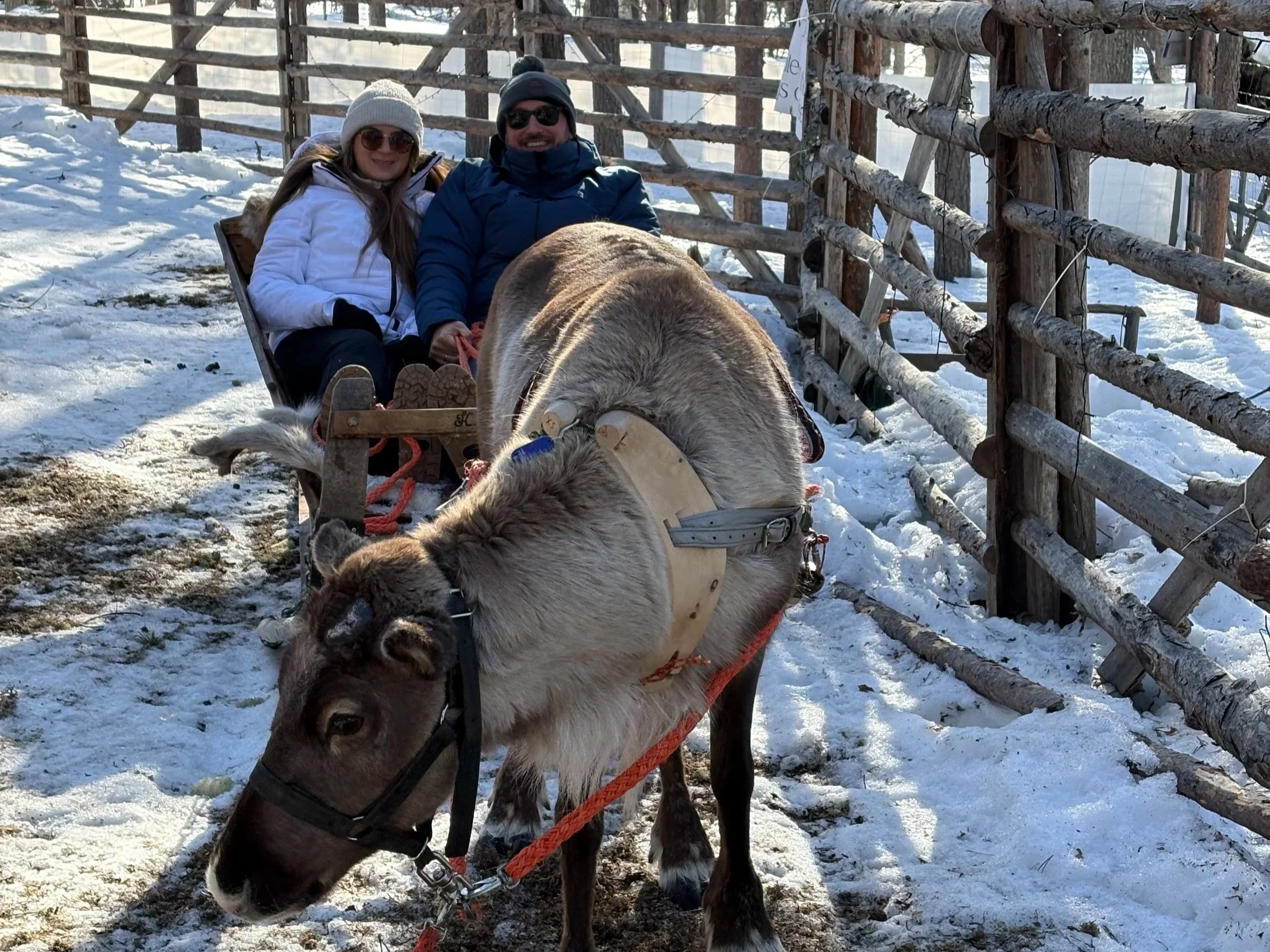
Reindeer are part of this place, but still ask questions.
Reindeer are much more deeply connected to life in the North.
In Finnish Lapland, reindeer are part of a living livelihood, culture, landscape and history. Horses, skis, walking routes and rivers have also been ways people have moved through this region.
But cultural connection does not automatically make every tourist experience responsible.
Reindeer tourism can also become too staged, too rushed, or too focused on photos if it not handled with care.
So again, the question is not only:
Is this traditional?
The question is also:
How is it done today?
Before booking a reindeer experience, you might ask:
Is this connected to a real local livelihood?
Who owns or runs the experience?
Are guests given context, or is it mostly a photo stop?
How are the animals handled?
Is there time to listen, ask questions and understand something about reindeer life?
A good experience should help you understand the place better - not just give you a quick picture with an animal.
If animals are involved, look closer
Any activity involving animals deserves extra care.
This does not automatically mean that travelers should avoid all animal-based experiences. But it does mean the decision should not be made lightly.
Before booking, look for answers to questions like:
How does the company talk about animal care?
Do they explain where the animals live and how they are cared for year-around?
Do they mention rest, training, retirement or daily routines?
Are the animals presented as living beings, or mainly as props for a tourist experience?
Does the company seem open and specific, or vague and overly polished?
If you cannot find any information, that is worth noticing.
Good animal experiences should not rely only on cuteness, speed or photos. They should be built on care, respect and transparency.
What is actually guaranteed?
This is especially important with northern lights tours.
Many travelers book a northern lights tour because they think it is the best (or only) way to see the aurora.
But if you choose your accommodation well, away from heavy light pollution and with access to open sky, you may not need a tour at all. Like if you stay at Polar Tranquil. 😉
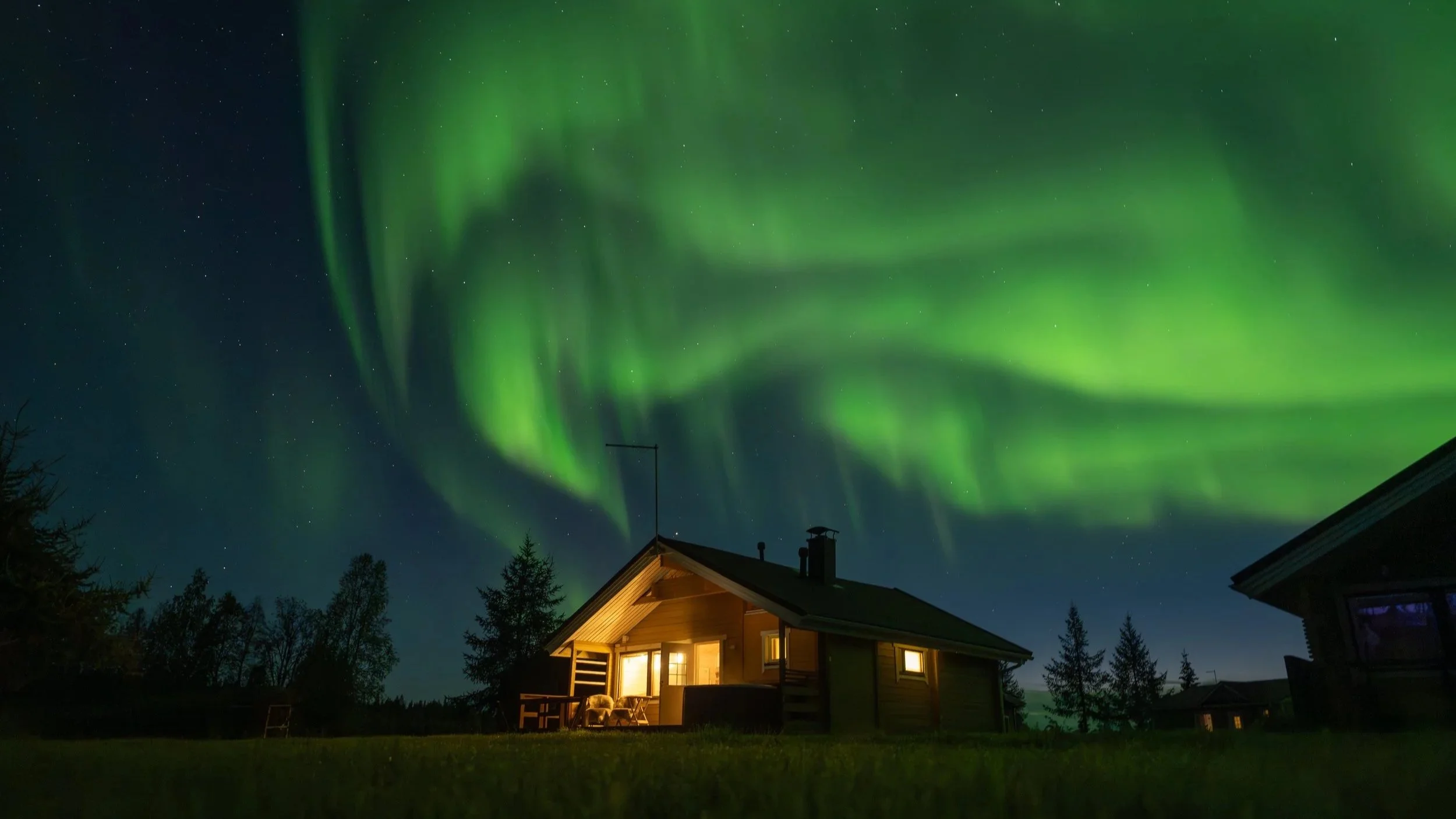
Sometimes the best northern lights experience starts by choosing where you stay.
Sometimes the best northern lights experience is very simple:
step outside,
turn off the lights,
let your eyes adjust,
wait,
and accept that nature does not perform on command.
If you do book a northern lights tour, it helps to understand what kind of tour it actually is.
Some tours are really another activity with a northern lights possibility attached to it: snowmobiling, reindeer sleigh rides, husky tours or other evening activities.
These can be enjoyable. But the guaranteed part is the activity.
The northern lights are only a possibility.
That is not necessarily a problem - as long as you understand what you are booking.
If the route and timing are fixed around another activity, it is not really ‘‘hunting’’ for the northern lights. It is doing an activity at night, with the chance of seeing auroras if the sky and conditions allow.
A dedicated northern lights tour should offer something different.
Ideally, the company follows weather, cloud cover, local conditions, road safety and aurora forecasts. And if the lights do not appear, the evening should still offer something meaningful: knowledge, stories, photography guidance, warm food, a fire or time with a guide who helps you understand what you are waiting for. And even better if it includes all of these!
Not just a drive into the dark and hope for the best.
Is there enough time?
One of the simplest questions to ask before booking is:
Does this experience have enough time to breathe?
Very short activities can be tempting. They are often cheaper, easier to fit into a schedule and seem convenient.
But in winter, even simple things take time.
Transfers take time.
Getting dressed takes time.
Safety briefings take time.
Cold affect people differently.
People want to ask questions, take photos, warm up and understand what they are doing.
A one- or two-hour activity can easily become rushed, especially if it includes transportation, animals, equipment, instructions and a tight schedule.
Longer does not always mean better.
But often, a longer experience gives more space for the things that make a memory meaningful.
A slower, less hectic start.
A proper introduction without the time pressure.
A warm meal.
Conversations by the fire.
Time to ask questions.
Time to be quiet.
Time to actually arrive.
Personally, we often prefer activities that last minimum 4-5 hours when possible, especially when they include a meal or a proper pause outdoors.
Not because everyone needs a long program every day.
But because one slower, better-held experience can be MUCH more valuable than several short, rushed ones.
Also from guides perspective - focusing on one longer tour will be much better than having to do multiple short trips trips in one day. Your guide will be much more relaxed and able to fully focus on making this one tour the best instead of thinking already the next ones.
Does this activity leave space around it?
When you book an activity, don’t only think about the activity itself.
Think about the day around it.
Will you have time to wake up slowly?
Will you have time to eat properly?
Will you be rushing from one pick-up to another?
Will you return with enough energy to enjoy the sauna, have dinner or step outside later?
Will there be space to feel what you just experienced?
Often we have seen travelers book so much that the trip becomes a sequence of logistics.
Pick-up times.
Meeting points.
Getting all your layers on and off takes time!
Tranfers.
Photos.
Next activity.
Next dinner.
Next alarm.
Sounds very relaxing right?
But Lapland is not only in the activities.
It is also in the space between them.
The quiet morning.
The walk from the cabin door.
The way the sky changes.
The first time you hear real winter silence.
The feeling after sauna.
The moment when you stop checking the time.
If your schedule is too full, you may miss those parts completely.
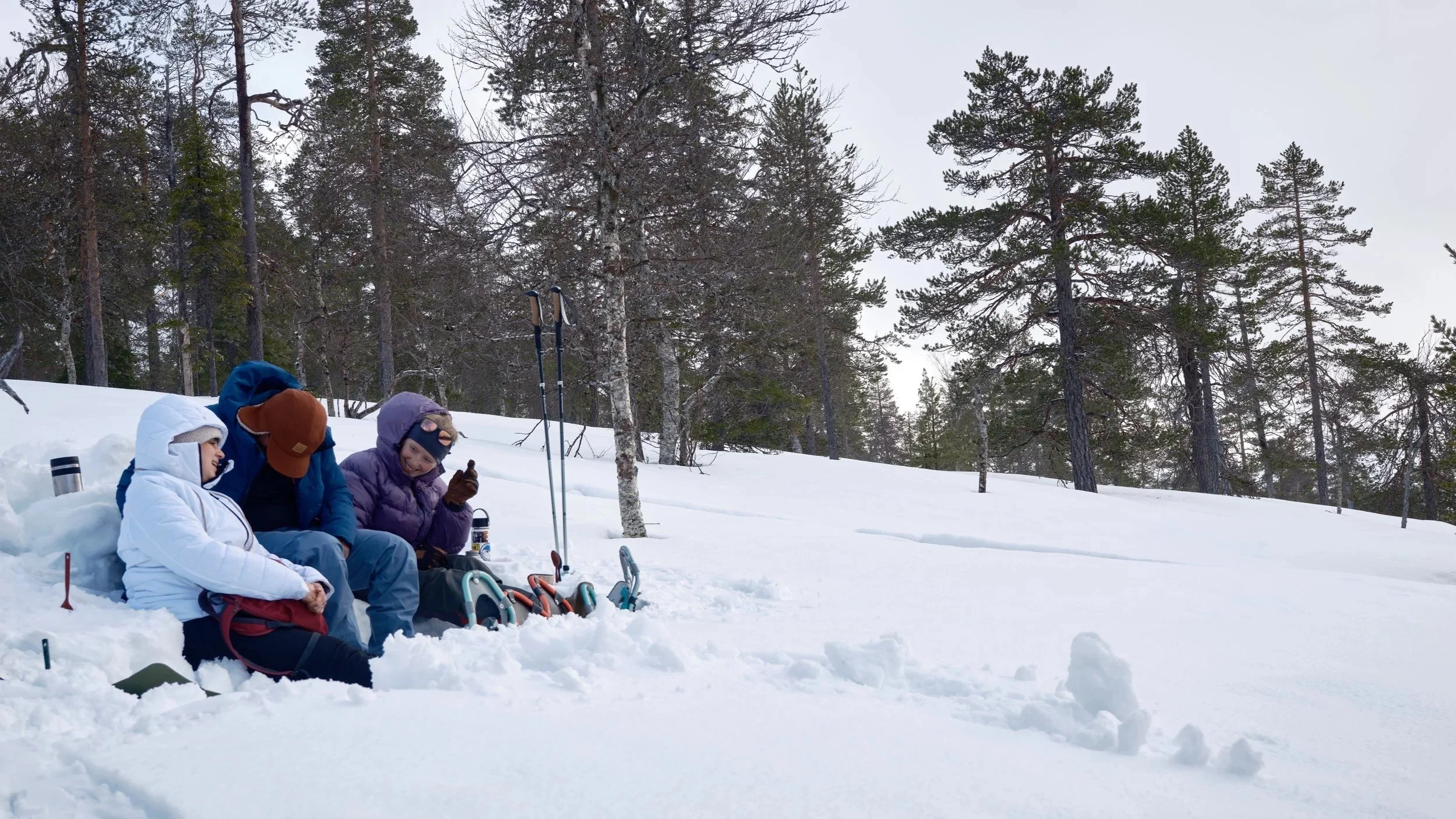
Having a lunch break in middle of nowhere just listening to silence. One of the best experiences you can have! Picture from end of March from our Fully Hosted stay and our snowshoe hike to our nearby national park.
Before booking, ask these questions:
You do not need to become an expert before visiting Lapland.
But before booking an activity, it helps to ask:
Do I actually want to do this, or do I feel pressure to do it?
Is this activity connected to the place, or mostly created for tourism?
If animals are involved, what do I know about their care?
Who owns or operates this experience?
What is actually guaranteed and what depends on weather or luck?
Is the company honest about conditions and limitations?
How long is the activity and does it have time to breathe?
Is there space before and after it in my day?
Will this experience help me understand Lapland better?
Does it support the kind of trip I truly want?
These questions will not make every decision perfect.
But they can help you choose with more awareness.
Choose fewer, choose better
You do not need to do everything in Lapland.
You do not need to book every ‘‘classic’’ activity for the trip to count.
You do not need to fill every day to make the journey meaningful.
Sometimes the better choice is one carefully chosen experience, with enough space around it.
Sometimes it is asking who you are booking with and why.
Sometimes it is deciding not to book something at all.
At Polar Tranquil, we are not here to sell you every activity in Lapland.
We believe in choosing carefully. We believe in leaving space. We believe that a trip becomes more meaningful when it is not rushed from one experience to the next.
Lapland is not something you need to complete.
It is a place to slow down and connect. To connect with yourself, nature and locals.
And before you book another activity, it is worth asking:
Will this help me to slow down and feel connected - or only help me tick one more thing off the list?